Is That Dirt on Your House, or Is It Organic Growth?
The two look similar from the driveway and they are not remotely the same problem. One rinses off. The other has roots in your siding.
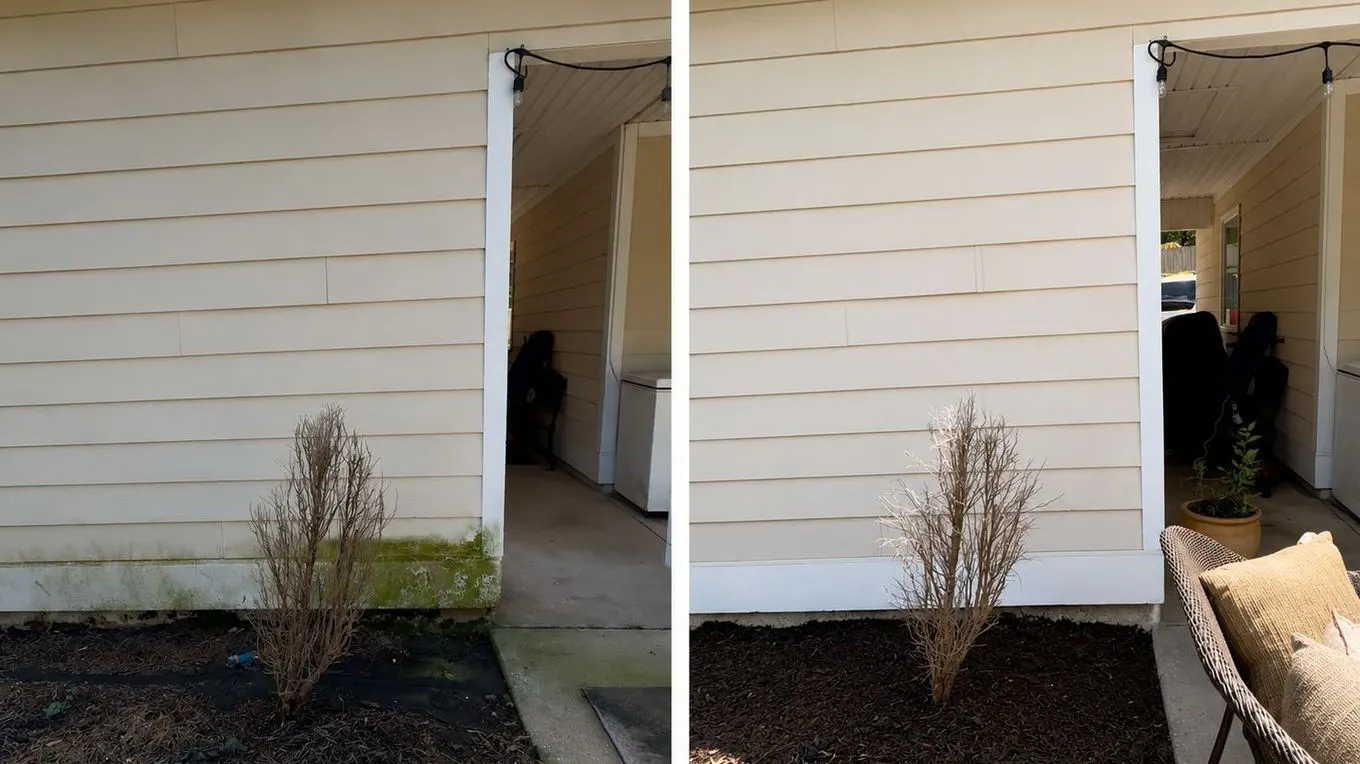
People send a photo of their house with a note that says “it just needs a good rinse.” Sometimes that is right. Often what you are looking at is alive, and rinsing is going to be a disappointing afternoon.
Here is how to tell what is actually on your house.
Green streaking down the wall
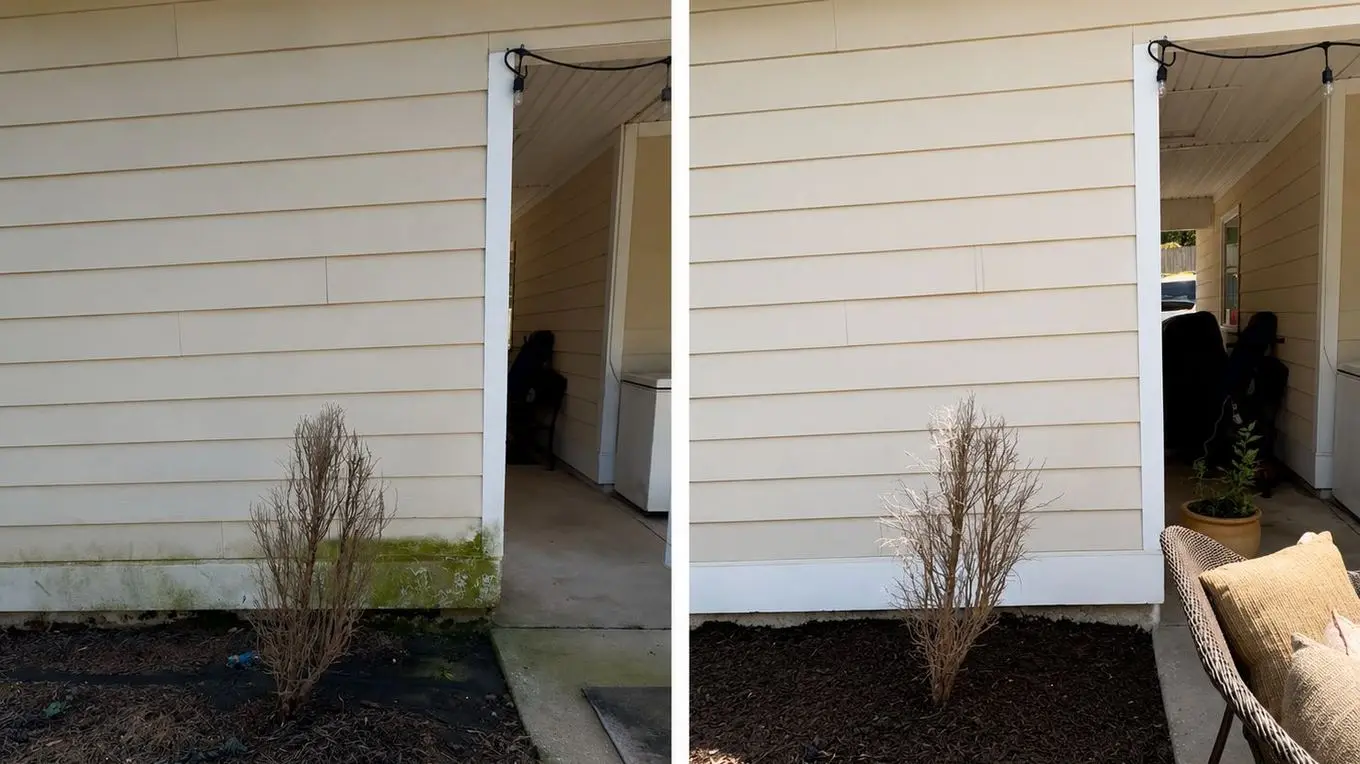
This is algae. It grows where moisture sits, which is why it shows up on the north side, under eaves, behind shrubs, and anywhere shade keeps the wall from drying.
The giveaway is the pattern. Algae runs in vertical streaks following the path water takes down the wall. Dirt does not organize itself that way.
Water alone will knock the surface layer off and leave the rest. It will be back within a couple of months, usually looking worse than before, because you have removed the dead outer layer and left the part that is still growing.
Black spotting, especially under the eaves
Usually mildew, sometimes artillery fungus if you have hardwood mulch against the house.
Mildew looks like scattered dark specks rather than streaks, and it concentrates where water drips or splashes. It responds well to a proper cleaning solution.
Artillery fungus is different and worth knowing about because it is the one people cannot get off. It shoots tiny black spores that stick like tar and often will not come off without taking finish with them. If your black spots are small, perfectly round, and only on the lower few feet of a wall near mulch beds, that is what you have, and it is a mulch problem more than a cleaning problem.
Yellow or greenish film everywhere
Pollen. Spring in Lee County covers everything, and it genuinely does rinse. If your house looks fine except for a uniform yellow haze in April, you do not need a cleaning company. You need a hose and some patience.
Gray, chalky patches on vinyl
That is oxidation, not dirt. The pigment in the vinyl has broken down from years of UV exposure. Cleaning removes the loose chalk on the surface and makes the whole wall consistent, but it does not restore the color, because the color is gone from the material itself.
It is worth saying before washing older vinyl, because the difference between what cleaning does and what somebody imagined it would do is where disappointment comes from.
Dark buildup at the very bottom of the wall
In this part of the state that is often clay splash from rain hitting the beds and bouncing up. It usually cleans off well. If it has been there through several seasons and the siding is porous or textured, some tint can remain.
Why water alone does not do it
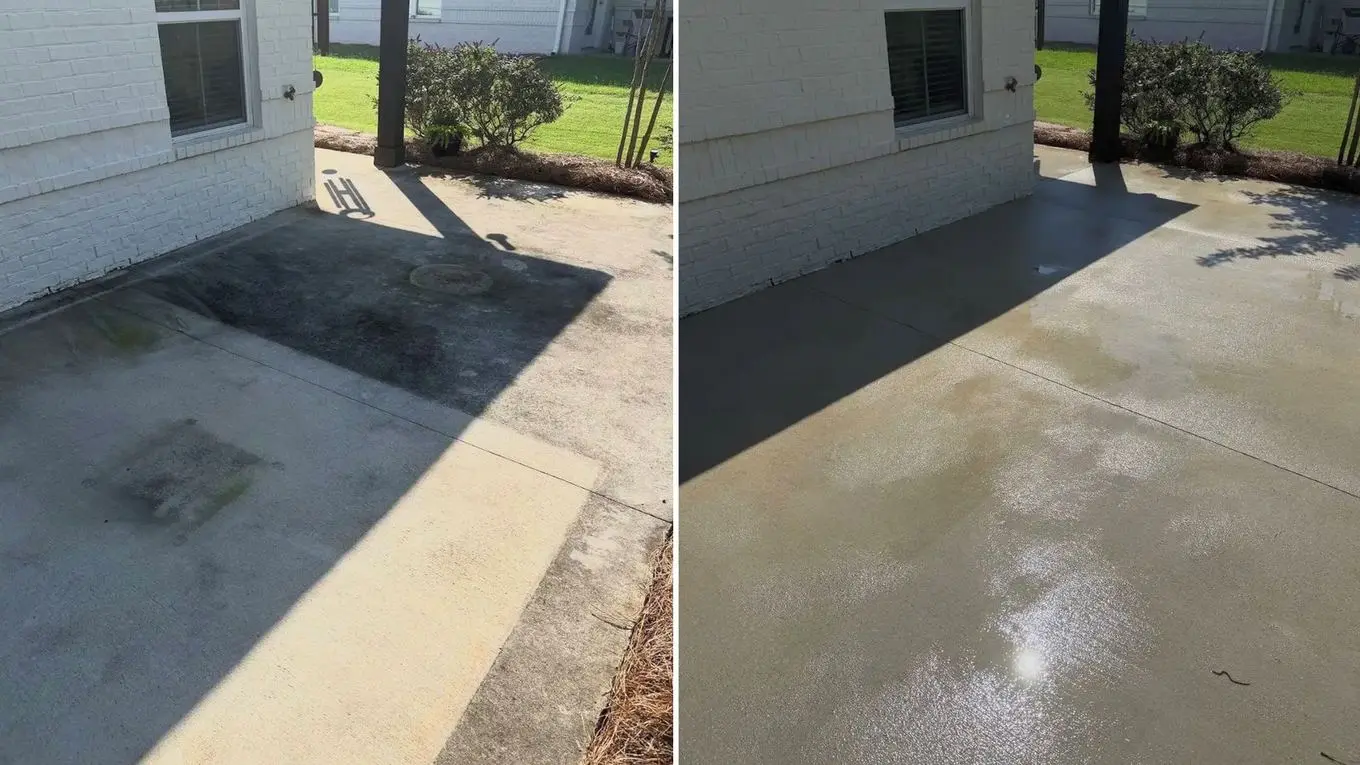
Organic growth has structure. Rinsing removes what is on top. A cleaning solution kills what is underneath and releases it, which is why a soft washed house stays clean for a year and a rinsed house goes back to green by the end of summer.
That is the entire argument for soft washing over pressure, and it is the reason a proper house wash costs more than an afternoon with a garden hose and holds up far longer.
The test
Wet a small hidden section and wipe it with a cloth.
If it comes off clean and stays clean, it was dirt or pollen. If it smears, comes back, or leaves a shadow, it is growing there, and it needs a solution rather than pressure.
Have a surface you are not sure about?
Send a photo and tell us what you are dealing with. You will get a straight answer, including if the answer is that cleaning will not fix it.