How Often Should You Pressure Wash a Driveway in Alabama?
There is no magic calendar date for concrete cleaning. A shaded driveway under trees can need attention long before an open drive that gets full sun all day.
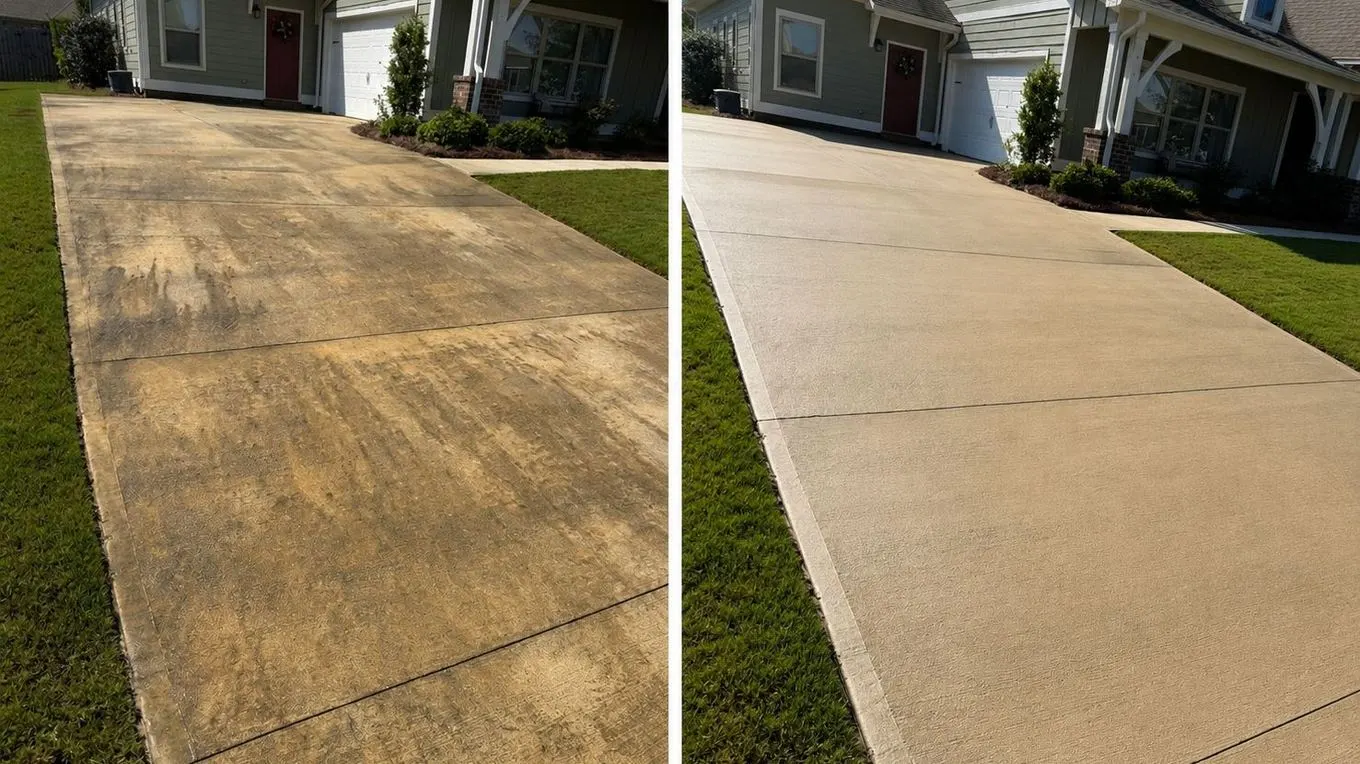
The honest answer is that it depends more on your lot than on the calendar.
Two houses on the same street can need concrete cleaning on completely different schedules. One has a driveway that gets sun from ten in the morning until five. The other has forty-year-old oaks over it. The second one is going to go green first, every time.
What actually drives the timing
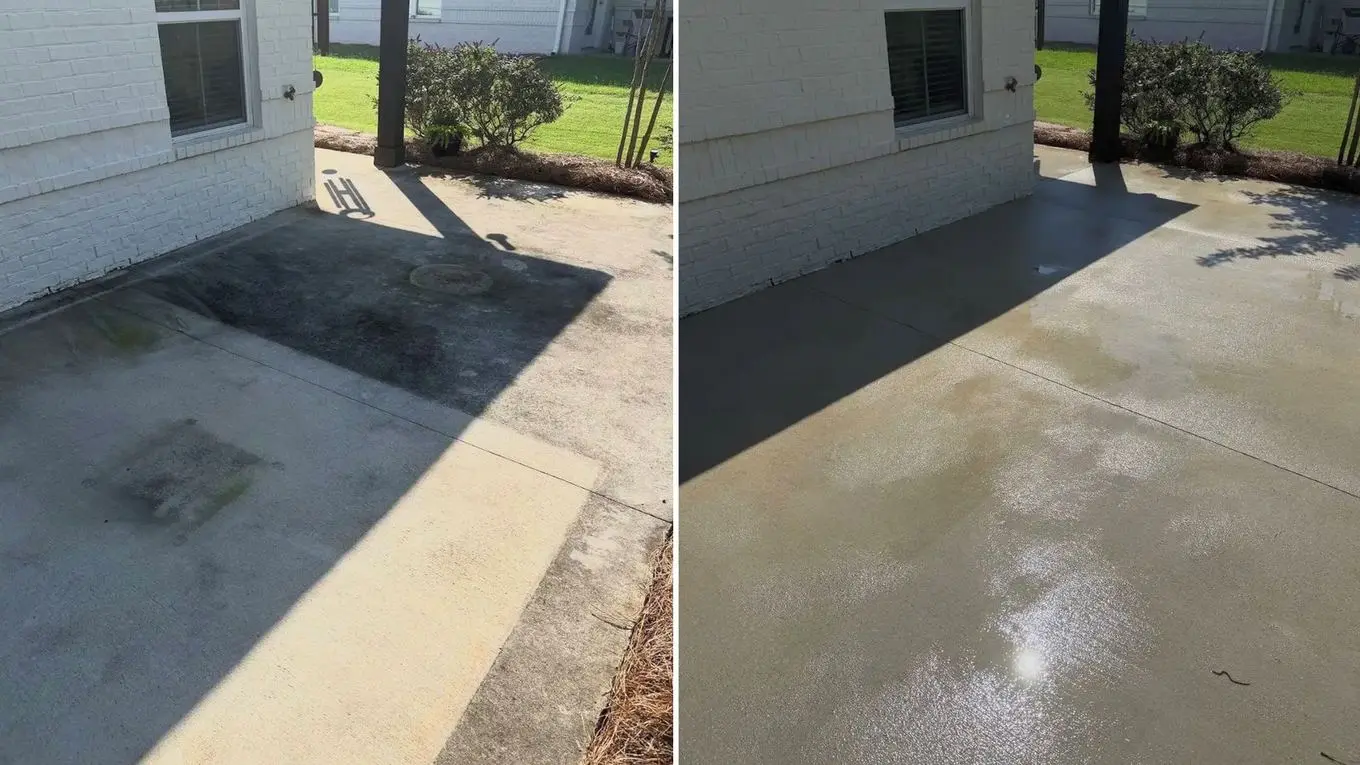
Shade. This is the biggest factor by a wide margin. Concrete that stays damp grows things. Concrete that dries out every day does not. If your driveway has a shaded half and a sunny half, you already know exactly where the line is, because you can see it.
Tree cover. Beyond shade, trees drop leaves, pollen, sap, and berries. All of it feeds what grows on the slab.
Drainage. If water sheets across the drive and sits at a low spot, that low spot will be the first thing to darken.
Traffic. Tire film builds up in the wheel lanes. A drive with three vehicles on it every day looks different at eighteen months than a drive with one.
Age and finish. Older, more porous concrete holds everything longer. A broom finish traps more than a smooth one.
Reasonable ranges
With all of that said, if you want numbers to plan around:
- Heavy shade, mature trees, poor drainage: every year, sometimes sooner
- Typical suburban lot with partial shade: about every eighteen months to two years
- Open, sunny, well drained, new construction: two to three years
It is better to clean it when it needs it than to sign up for a schedule. Which brings us to the actual test.
The test that works
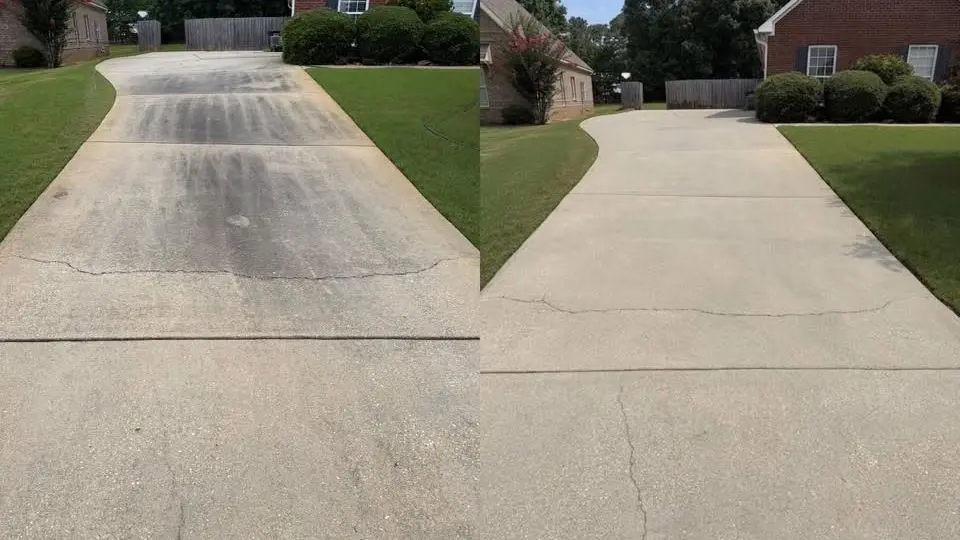
Walk out and look at the edges of your driveway where it meets the grass, and look at the expansion joints.
Growth starts there. Those two places hold moisture longer than the open field of the slab, so they go first. If the joints are showing a green or black line and the edges are darkening, the rest of the slab is not far behind, even if it still looks passable from the street.
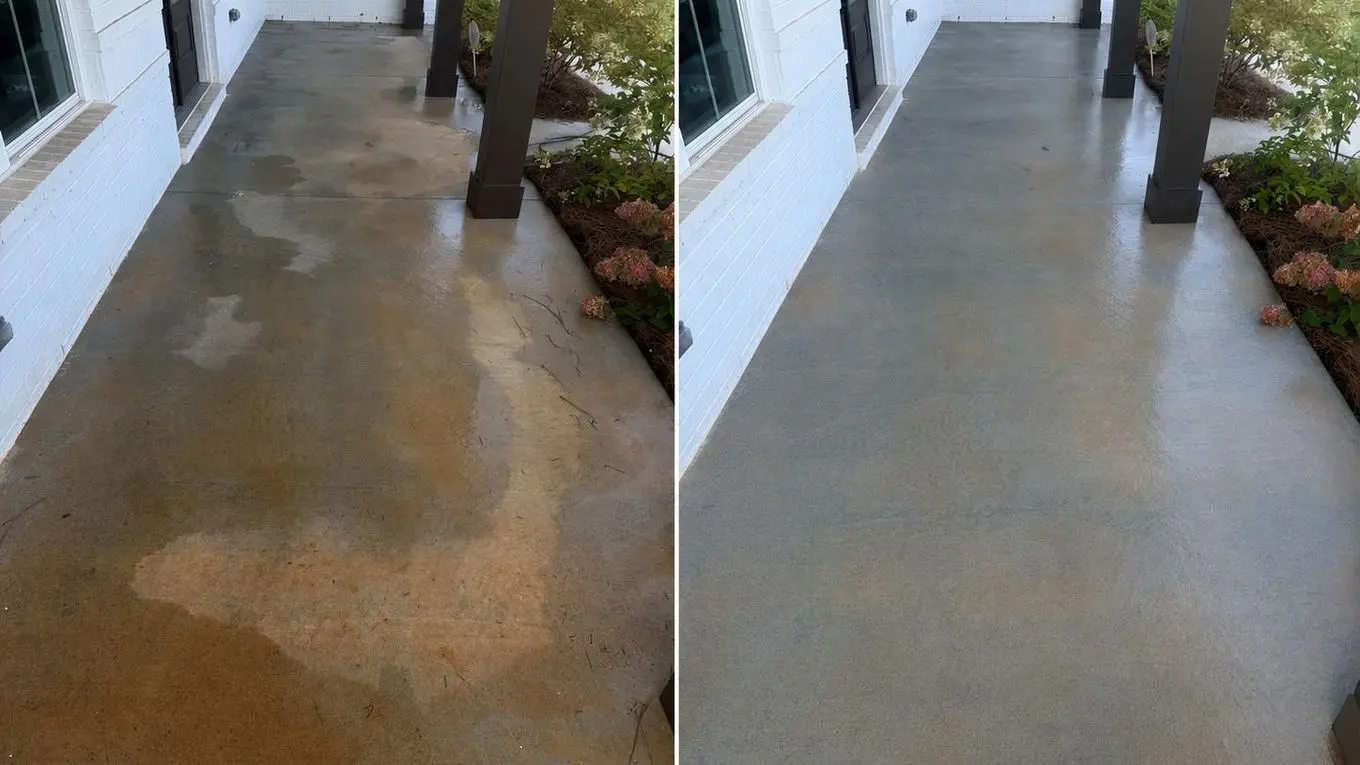
The other test is the comparison one. If you have a covered porch or an apron that never sees weather, look at that and then look at the drive. The difference is what you have lost.
Cleaning it sooner is cheaper than cleaning it late
This is not a sales line, it is how the work goes.
Growth that has been on concrete for one season sits mostly on the surface. It pretreats, it comes off, and the slab looks even. Growth that has been there for five years has worked into the pores, sometimes has clay layered into it, and takes more work, more product, and more time. Sometimes it does not come all the way back.
The same is true for clay staining, which is its own subject and is covered separately.
What we would tell a neighbor
Do not clean your driveway every spring because it is spring. Look at the joints and the edges. When those start going, get it done. For a lot of lots around here that lands somewhere between one and two years, and under heavy trees it is closer to one.
Have a surface you are not sure about?
Send a photo and tell us what you are dealing with. You will get a straight answer, including if the answer is that cleaning will not fix it.