Why Your Driveway Has Black Lines and Dark Patches
The dark marks on a driveway are not all the same thing, and telling them apart is what decides whether cleaning is going to fix it.
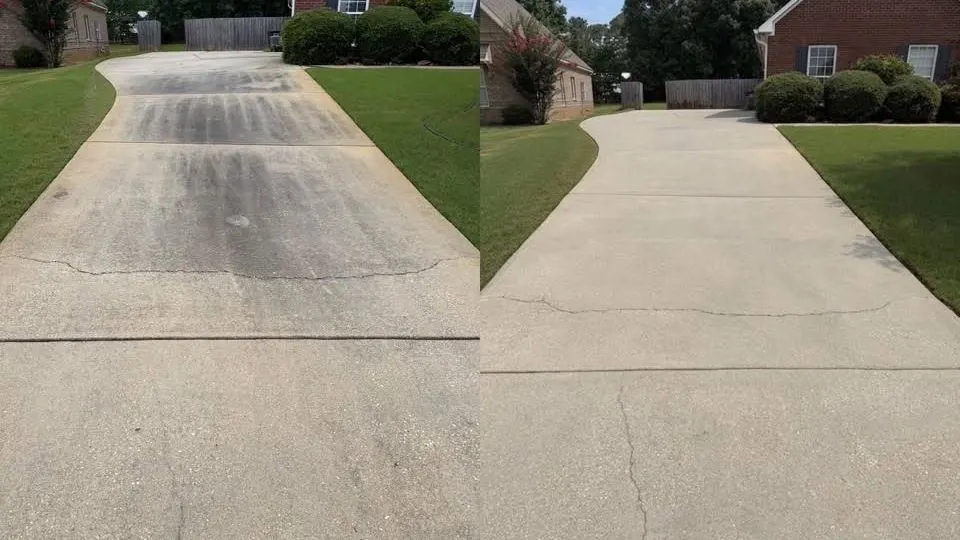
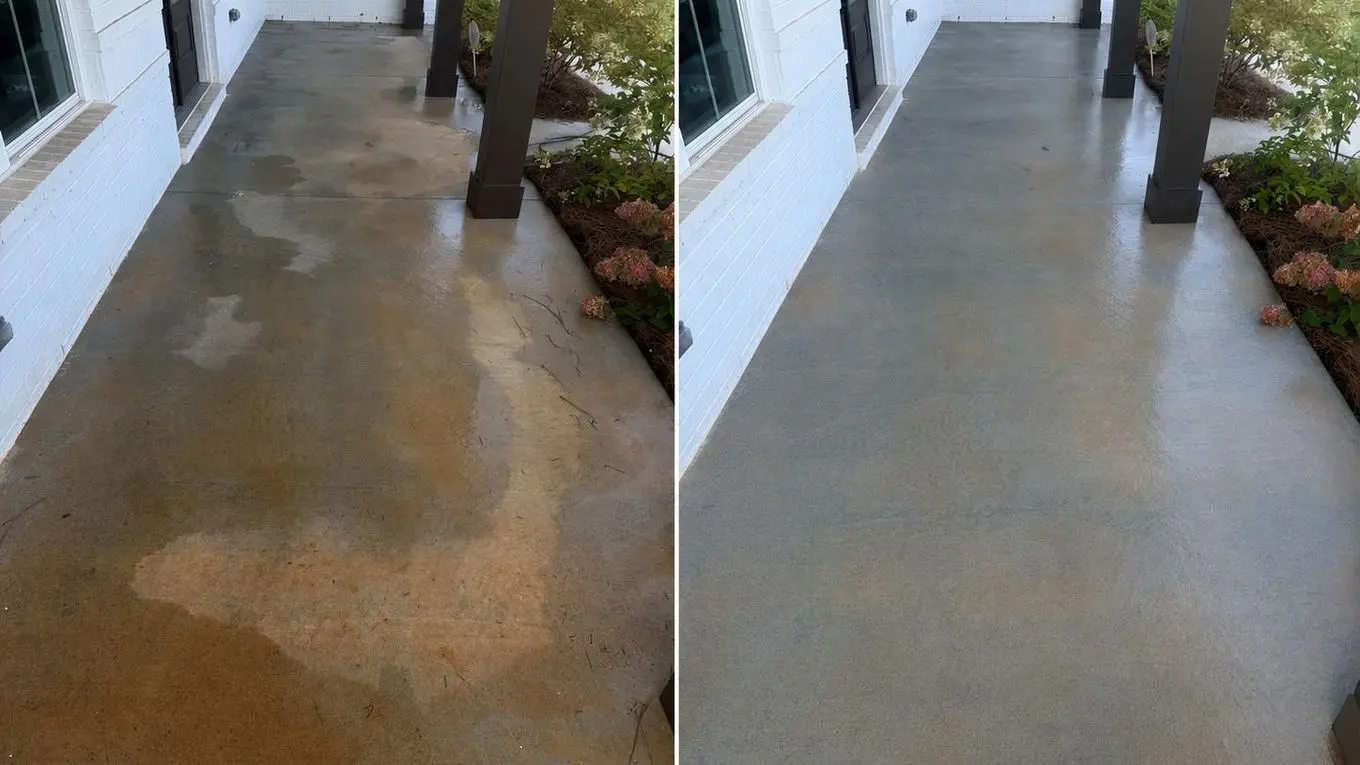
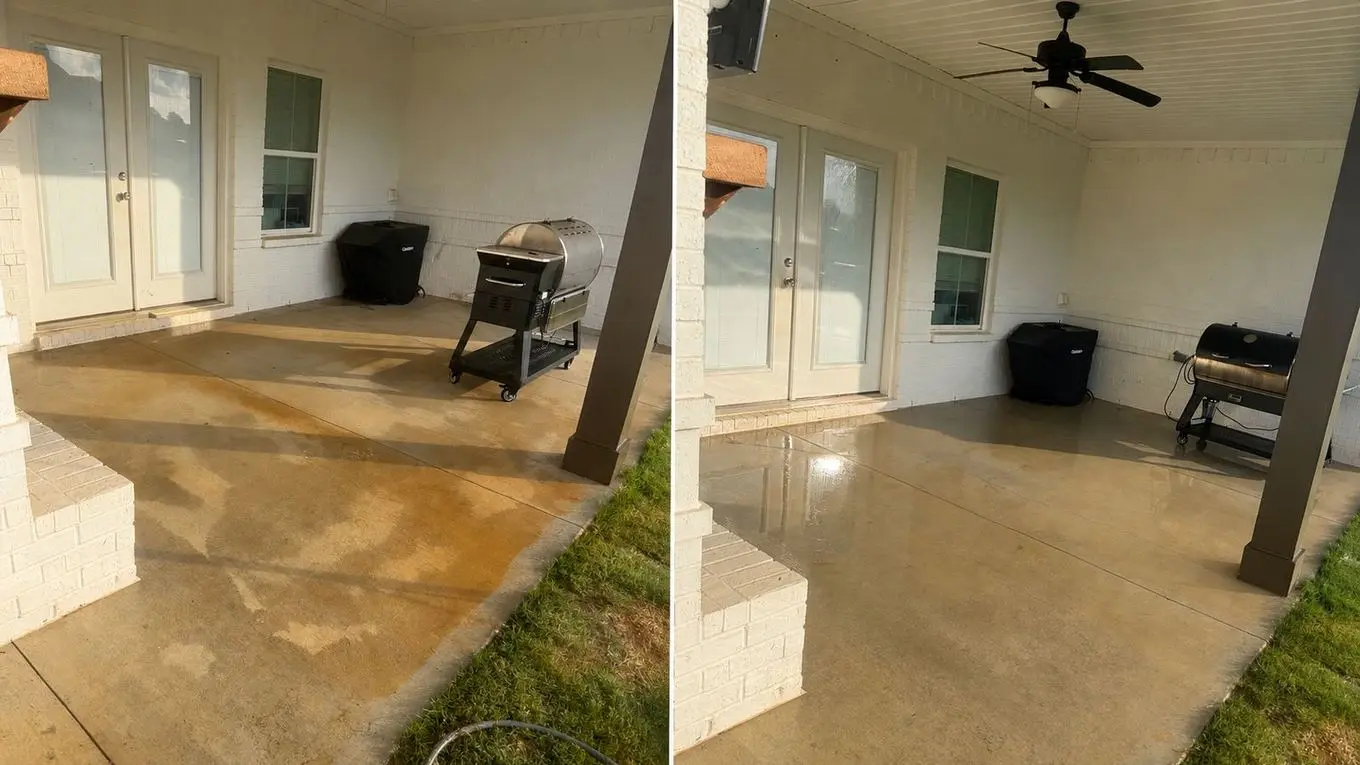
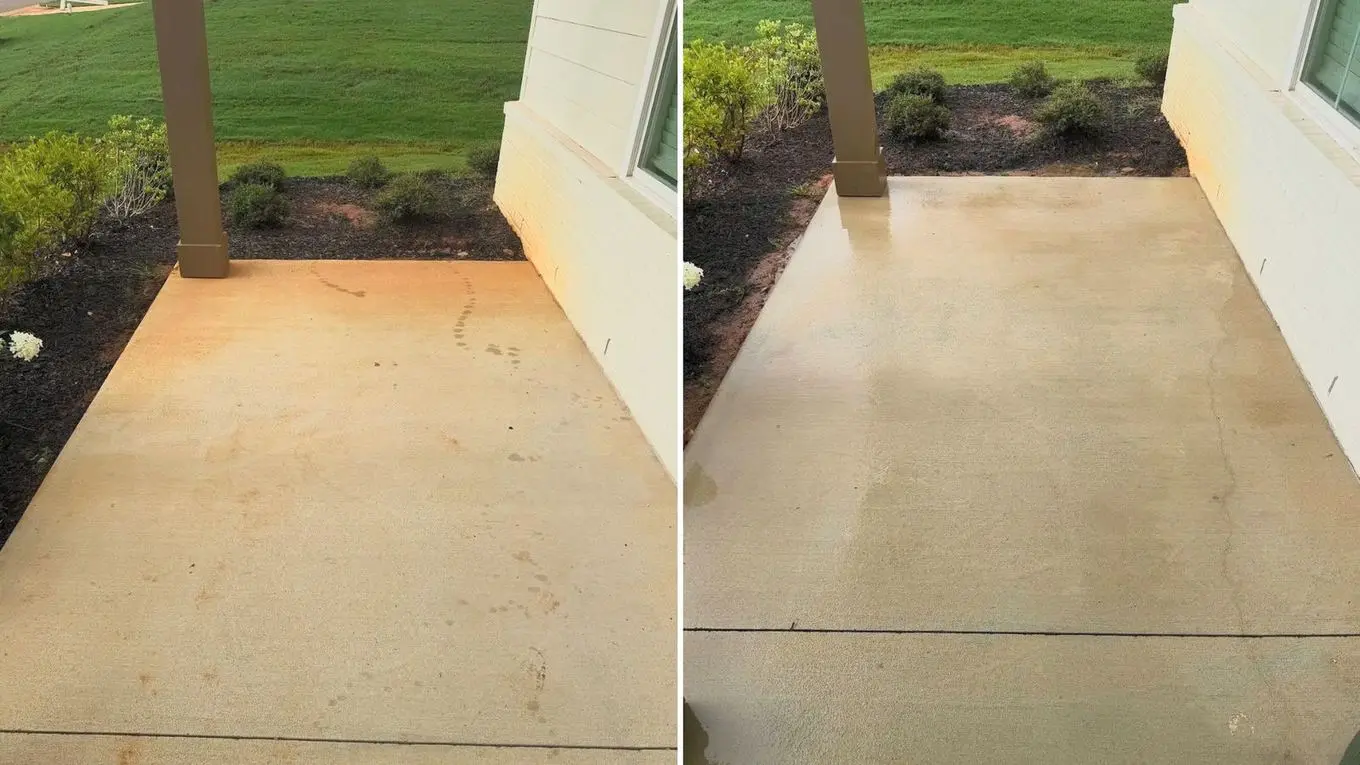
Not every dark mark on a driveway is dirt, and the ones that are not will not respond to cleaning no matter how good the equipment is. Here is what we look for when somebody sends a photo.
Dark lines that follow the joints
Almost always organic growth. Expansion joints hold moisture longer than the open slab, so growth starts there and spreads outward.
This cleans up well. It is also the earliest warning sign that the rest of the slab is on its way.
A dark stripe down the middle
Tire film and road grime, concentrated in the wheel lanes.
Your tires deposit a thin layer of rubber, oil, and whatever is on the road every time you pull in. It builds slowly and evenly, which is why you rarely notice it until you clean half the driveway and see the difference.
Comes up with a degreaser and a surface cleaner. Sometimes takes a second pass.
A patch that is always darker, in the same spot
Look at where the water goes.
If a low spot holds water after rain, that spot is going to stay damp longer than everything around it, and damp concrete grows things. The stain is the symptom. The drainage is the cause, and cleaning it will bring it back looking good until it rains again.
If it is a spot under a downspout, same story with a different water source.
Dark shadowing along one edge
Usually the shade line, and usually where the grass or a bed meets the concrete. That edge stays damp, gets organic material dropped on it, and takes clay splash from rain.
Cleans up, comes back first.
Black spots that will not move
A few possibilities, none of which are ordinary dirt.
Fully absorbed oil. Old drips that have soaked into porous concrete. The concrete itself is stained now. Degreasing will lighten it, sometimes substantially, and it usually will not disappear.
Roofing tar or driveway sealer. Anything that was applied to the surface and failed. Cleaning removes what is loose and leaves what has bonded.
Artillery fungus or leaf tannin. Organic staining that has leached into the surface. Some of it responds to treatment, some has permanently tinted the concrete.
Rust. Sprinkler heads, metal furniture, fertilizer, and rebar too close to the surface. Rust needs its own treatment and is one of the least predictable stains on concrete.
Patchy light and dark that follows no pattern
This one is worth mentioning because it usually is not a stain at all.
Concrete can cure unevenly. Weather during the pour, an inconsistent mix, or a finisher working the surface differently across the slab all leave permanent color variation. It has been there since the day it was poured, and the reason you are noticing it now is that the general dirt on top used to hide it.
That is one of the very few situations where cleaning a driveway makes somebody less happy, and it is why we try to flag it beforehand when it shows up in a photo.
The short version
If it follows water, shade, joints, or traffic, cleaning fixes it.
If it is a defined spot with a hard edge that has been there for years, cleaning will probably lighten it and probably not remove it.
If you are not sure which one yours is, send a picture. It is usually obvious from a decent photo, and knowing before you pay for the job is worth more than any of this article.
Have a surface you are not sure about?
Send a photo and tell us what you are dealing with. You will get a straight answer, including if the answer is that cleaning will not fix it.