Why Some Concrete Still Shows Stains After Professional Cleaning
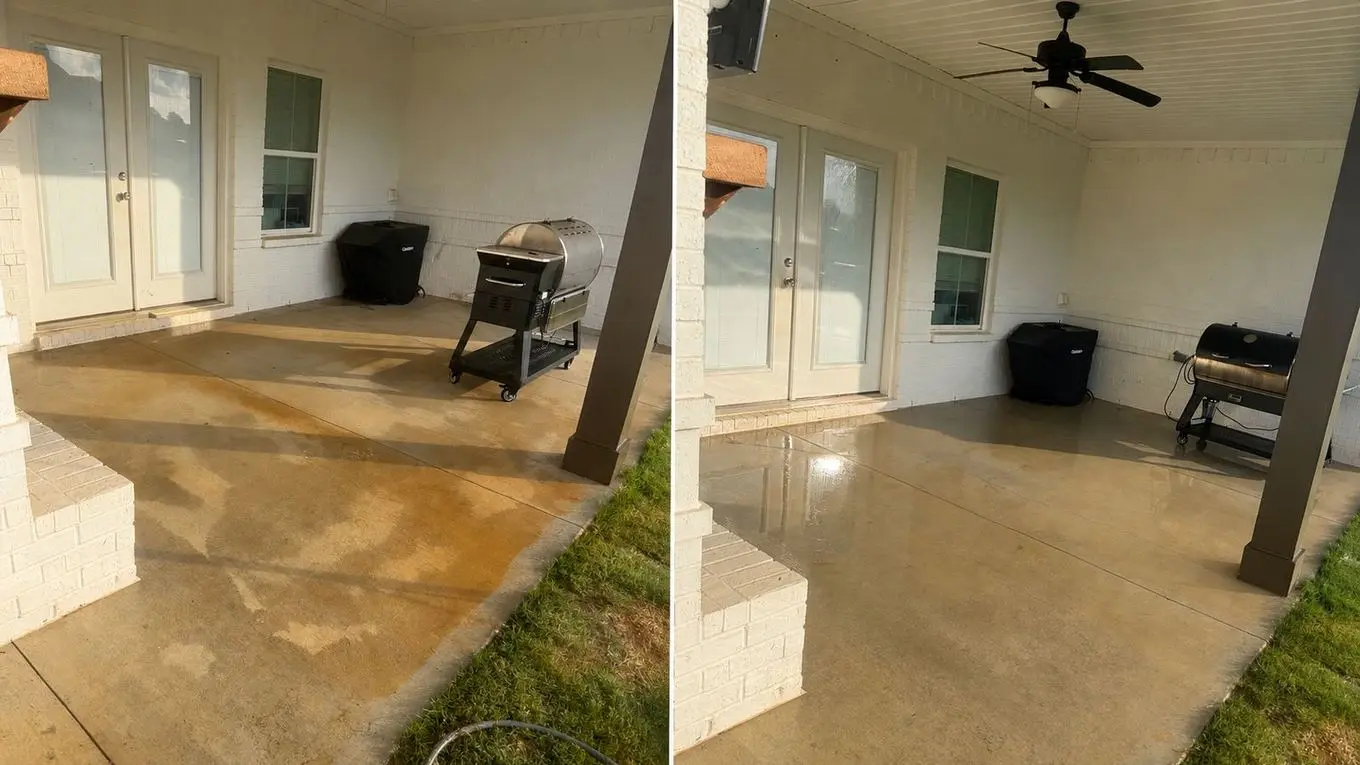
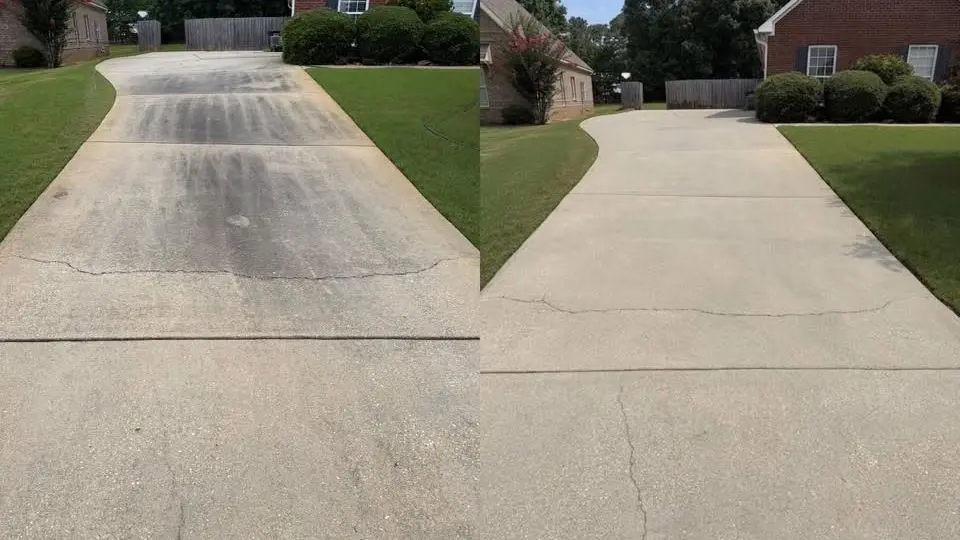
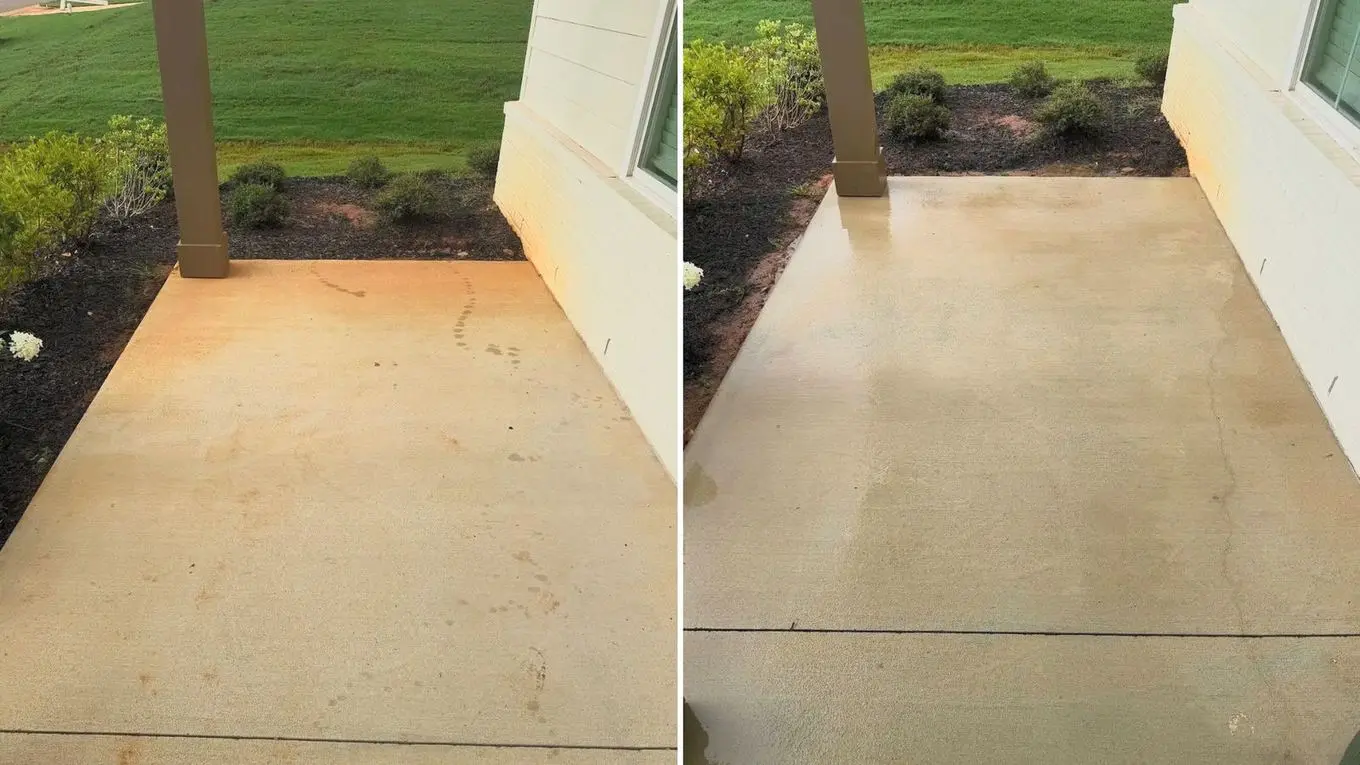
Clean does not mean restored. Some marks are in the concrete rather than on it, and no amount of pressure or product changes that.
This is the article worth reading before hiring anybody, including us.
Exterior cleaning removes what is sitting on and in the surface of a material. It does not resurface, refinish, or restore that material. Most of the time the difference does not come up, because most of what makes concrete look bad is organic growth and general grime, and both of those come off completely.
Sometimes it does come up. Here is when, and why.
The distinction that explains all of it
There are two categories of mark on concrete.
On the surface. Dirt, algae, mildew, tire film, pollen, recent spills. This sits on top of and just inside the pores. Cleaning removes it. The result looks like new concrete because it is the same concrete it always was, uncovered.
In the material. Something has chemically changed the concrete or has soaked deep into it. The mark is now part of the slab. Cleaning takes off everything above it and leaves what has become the concrete itself.
Almost every disappointing cleaning result is a surface expectation applied to an in-the-material problem.
The usual suspects
Oil
Concrete is porous and oil is thin, so a drip that sat there for two years is not on the driveway, it is in it, sometimes a quarter inch down.
Degreasing pulls out what is reachable. What has migrated deeper stays and often wicks back toward the surface over the following weeks, which is why an oil spot can look better on the day and slightly worse a month later.
Recent oil that has not soaked in is a completely different story and usually comes out.
Rust
From sprinkler heads, metal furniture, fertilizer, rebar sitting too close to the surface, or anything iron that has spent a wet season on the slab.
Rust is a chemical stain, not a deposit. It responds to a rust-specific treatment rather than to cleaning, results range from complete removal to modest lightening, and the treatment itself has to be used carefully because the aggressive versions attack the concrete.
Red clay
Covered in its own article, because in this part of the state it deserves one. Short version: the iron particles are fine enough to migrate into the pores, and older or more porous concrete holds them permanently.
Fertilizer
The iron in most lawn fertilizers stains concrete, and it stains it in exactly the pattern of a spreader that got pushed across the driveway. It behaves like rust because it essentially is rust.
Paint and sealers
Latex overspray sometimes comes up. Anything that bonded and cured, including failed driveway sealer, roofing tar, and adhesive, generally does not. Removing those is a stripping job with its own chemicals and its own risks to the concrete.
Efflorescence
The white chalky bloom. It is mineral salt migrating out of the concrete as moisture passes through. Cleaning removes what has already surfaced. If moisture is still moving through the slab it will be back, because the cause is water, not dirt.
Discoloration from the pour
The one nobody expects. Concrete can cure unevenly because of weather during the pour, an inconsistent mix, calcium chloride in the mix, or a finisher working the surface differently across the slab.
That variation has been there since day one. It was hidden under a uniform layer of dirt, and cleaning reveals it. This is genuinely the only situation where a customer is less happy after a good cleaning, and it is why we try to flag it from the photos beforehand.
Age and previous damage
Concrete that has spalled, been etched by a previous pressure washing, or lost its surface paste will be clean and will still be rough and uneven. Cleaning cannot put material back.
What good work actually does about it
Says so first. Every one of these is identifiable during an estimate by somebody who has seen them before. Telling you on the front end is not managing expectations, it is just the job.
Tests where it is worth testing. On heavy staining, a small test area shows you the realistic result before you commit to the whole slab.
Treats separately what needs treating separately. Oil, rust, and clay do not respond to the same thing. Running the same process over all of them and calling it done is not a cleaning method.
Does not oversell the outcome. The words to be careful about are “brand new” and “like it was poured yesterday.”
What clean actually means
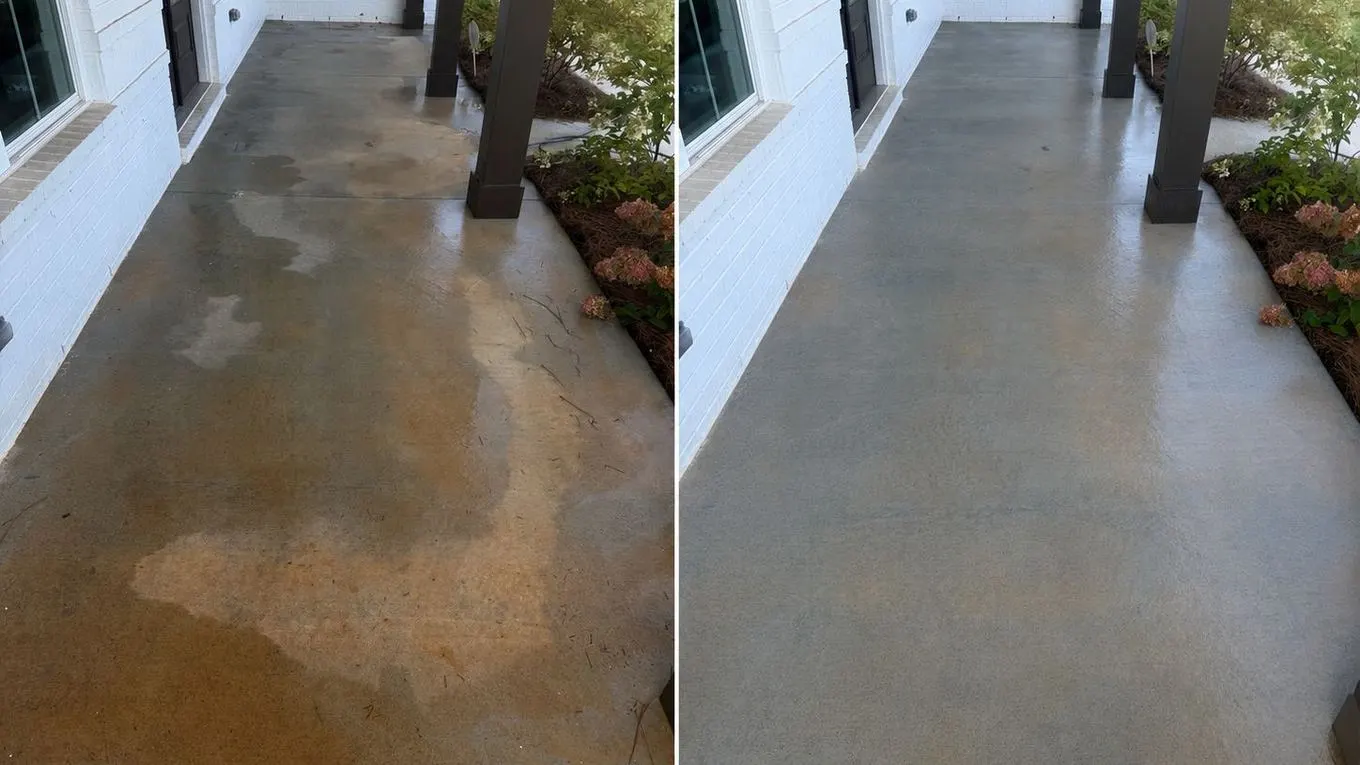
A properly cleaned slab has had every removable thing removed. It looks even, the color is consistent where the concrete is consistent, and the difference from before is obvious.
What remains is the concrete you own. Sometimes that includes an oil shadow near the garage or a rust ring where a table sat for six years.
Knowing which of those you are looking at before you spend the money is the whole point of this article.
Have a surface you are not sure about?
Send a photo and tell us what you are dealing with. You will get a straight answer, including if the answer is that cleaning will not fix it.