Red Clay Stains on Concrete: What Homeowners Should Know
East Alabama's red soil creates staining that ordinary surface cleaning does not always remove. Here is what determines whether yours comes out, and what to be careful about.
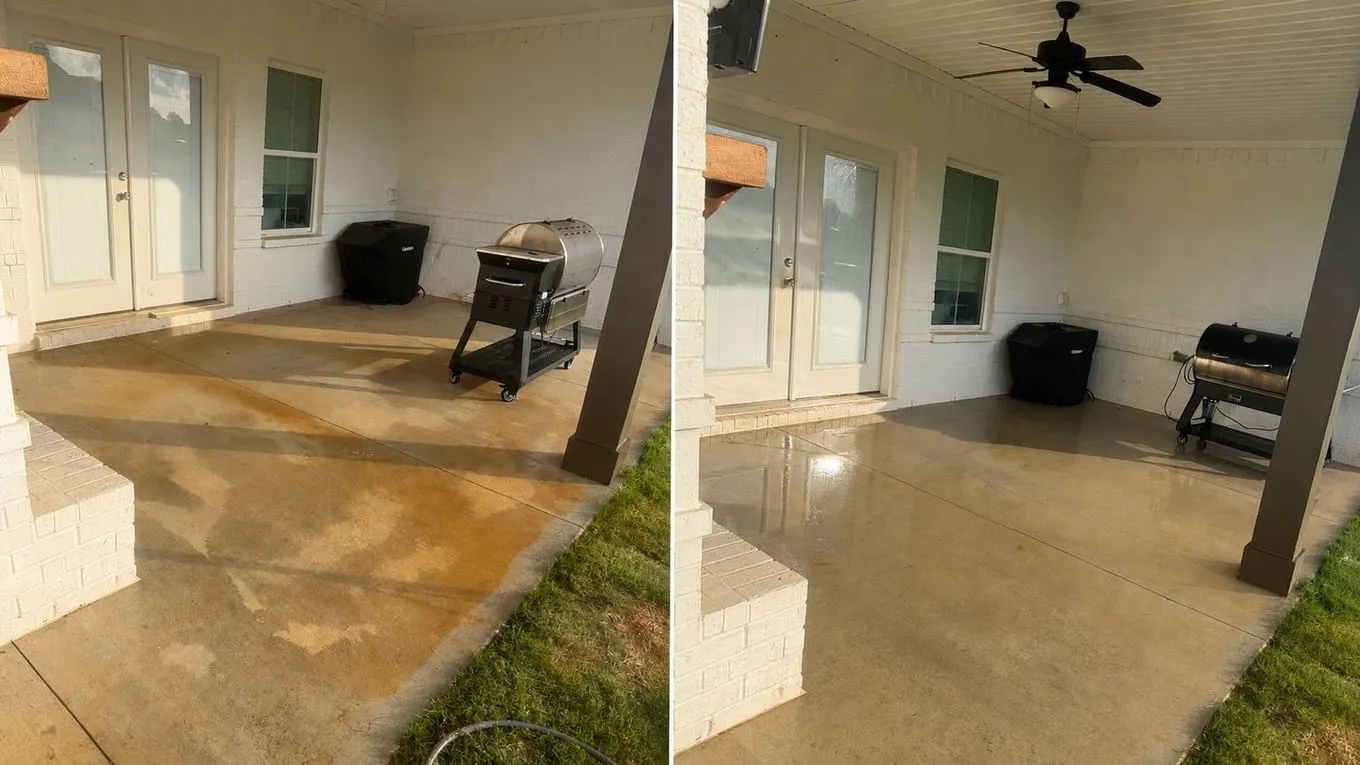
If you live around here you already know what red clay does. It gets on shoes, on tires, on the mower, on the dog, and eventually on the concrete. Then it rains, and whatever was in the beds ends up on your porch.
It is also the subject where expectations matter most, so here is the honest version.
What clay staining actually is
Red clay gets its color from iron oxide. The particles are extremely fine, much finer than sand, and that is the whole problem.
Concrete looks solid and is not. It is porous, with a network of tiny voids running through the surface. Clay particles are small enough to get carried down into those pores by water. Once they are in there, they are not sitting on the surface where a surface cleaner can reach them. They are in the material.
That is the difference between clay that comes off and clay that does not.
What determines whether it comes out
How long it has been there. Recent clay from this season’s rain usually lifts well. Clay that has been washing onto the same slab for five years has had time to work down.
How porous the concrete is. A smooth, well-finished, relatively new slab resists it. Older concrete, broom-finished concrete, and anything that has weathered for a couple of decades takes it in.
Whether it stays wet. A covered porch that catches runoff and holds it is the worst case. The clay sits in solution against the surface and keeps migrating in.
Whether it has been sealed. Sealed concrete is dramatically more resistant, because the clay never reaches the pores. This is one of the few genuinely useful preventive steps.
What we can actually do
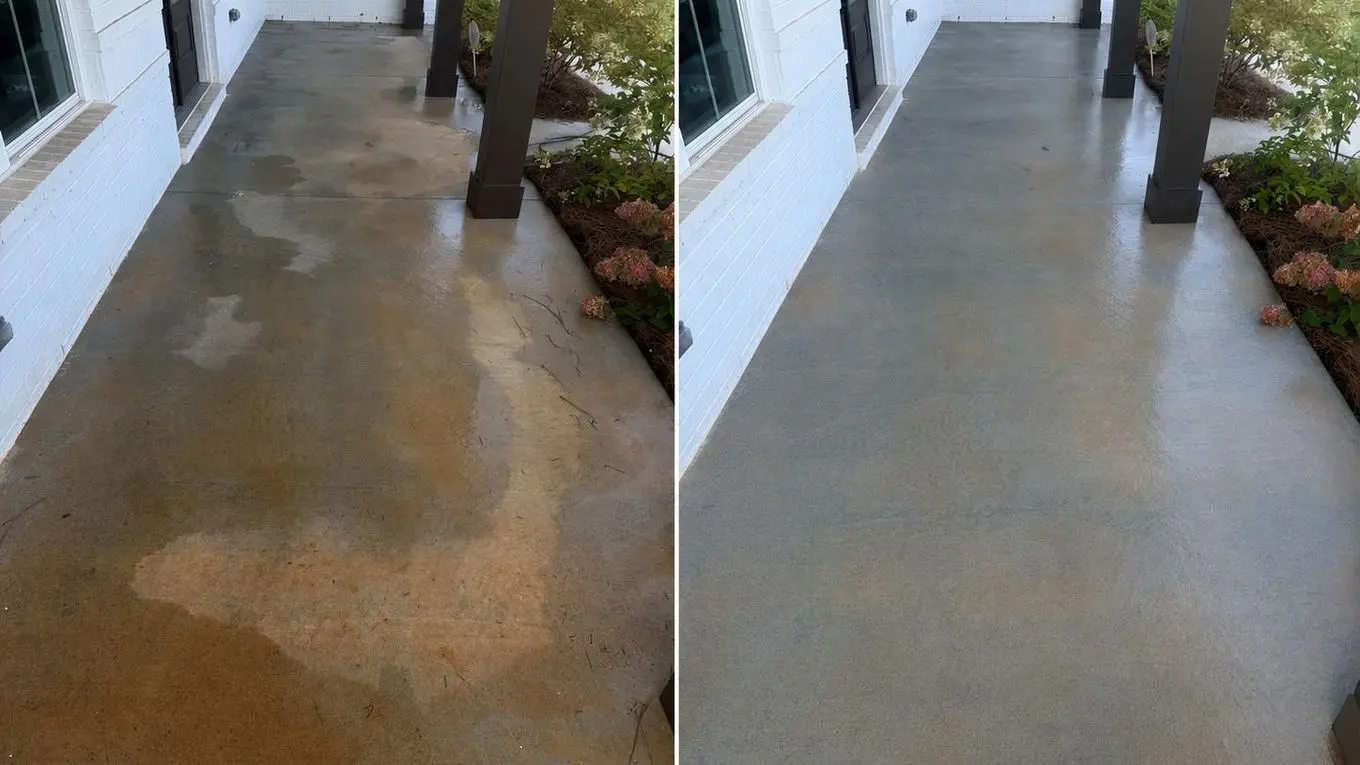
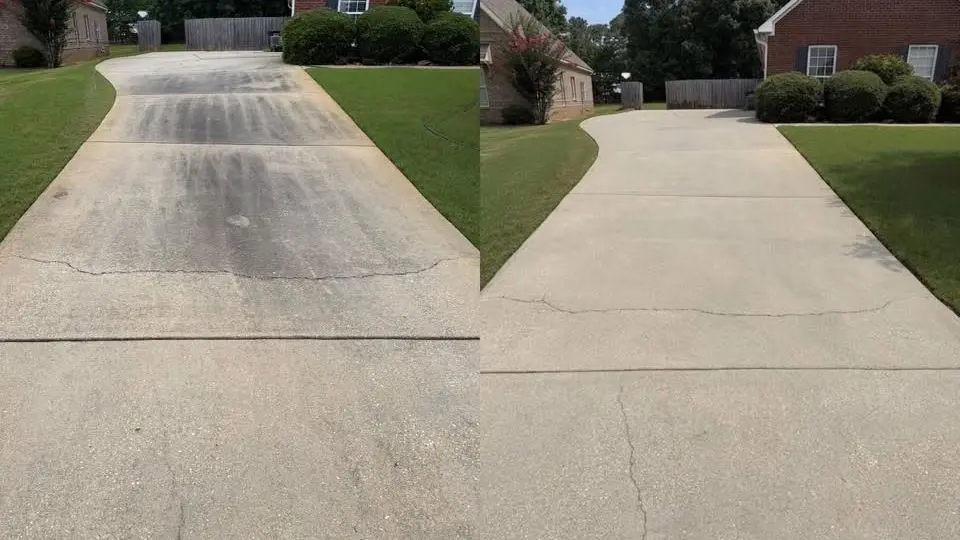
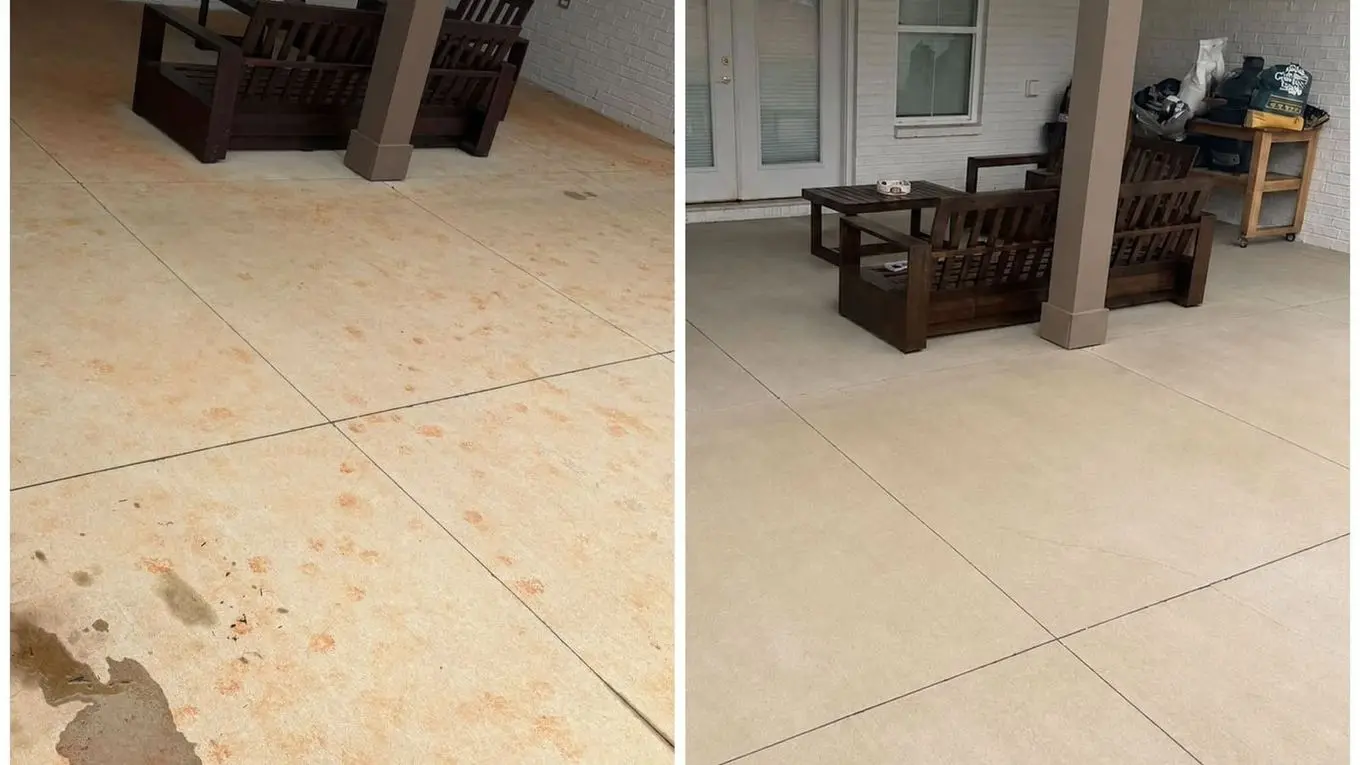
A pretreatment, a surface cleaner, and proper edge work will bring back a lot of clay-stained concrete, and the before and after difference can be dramatic. The gallery on this site has several of them.
For heavier staining there are treatments that target the iron specifically rather than working like a general cleaner.
What we will not do is quote a heavy clay job sight unseen and promise complete removal. On badly stained older concrete, ask about testing a small area first, so you can see the realistic result before committing to the whole slab. It prevents the conversation nobody enjoys.
About acid
You will find advice online telling you to use muriatic acid on clay stains. It is worth being clear about this.
Acid does remove clay staining. It does it by dissolving the top layer of the concrete itself, which is why it works. What comes with that:
- The surface texture changes, often permanently
- It can etch unevenly, leaving a patchy result that looks worse than the stain did
- It leaves the concrete more porous than it was, which means it will stain faster next time
- It is genuinely dangerous to handle, and dangerous to the plants, metal, and finishes around it
- Neutralizing and disposing of it properly is not optional
This is not a blanket warning against ever using it. It is a warning that if the concrete matters to you, do not learn on it, and that you are trading the stain for a different permanent condition.
Acid-based treatments have a place in professional work, used carefully and in the right situation. Casually pouring hardware store acid on a driveway is not that.
What actually prevents it
The stain is a symptom of clay getting onto concrete and staying wet. So:
Fix the runoff. If a bed drains across your porch every time it rains, that is the cause. Edging, a gutter extension, or regrading the bed does more than any cleaning schedule.
Mulch or ground cover on bare clay. Bare soil next to concrete is going to end up on the concrete.
Clean it sooner. This one matters more with clay than with anything else. Surface clay lifts. Clay that has been soaking in for years does not always.
Consider sealing. After the concrete is clean and fully dry, a sealer keeps clay from reaching the pores in the first place. It is real work with real cost, and on a porch that stains every spring it pays for itself.
What we tell people on the estimate
If your concrete is under about ten years old and the clay is from recent seasons, expect a result you are happy with.
If it is older concrete with years of staining, expect significant improvement and expect some tint to remain, especially in the most saturated areas.
If somebody promises you more than that without looking at it, they either have not done many of these or they are planning to have a different conversation once the invoice is due.
Send a photo. Clay is one of the easier things to judge from a picture, and you will get a straight answer.
Have a surface you are not sure about?
Send a photo and tell us what you are dealing with. You will get a straight answer, including if the answer is that cleaning will not fix it.