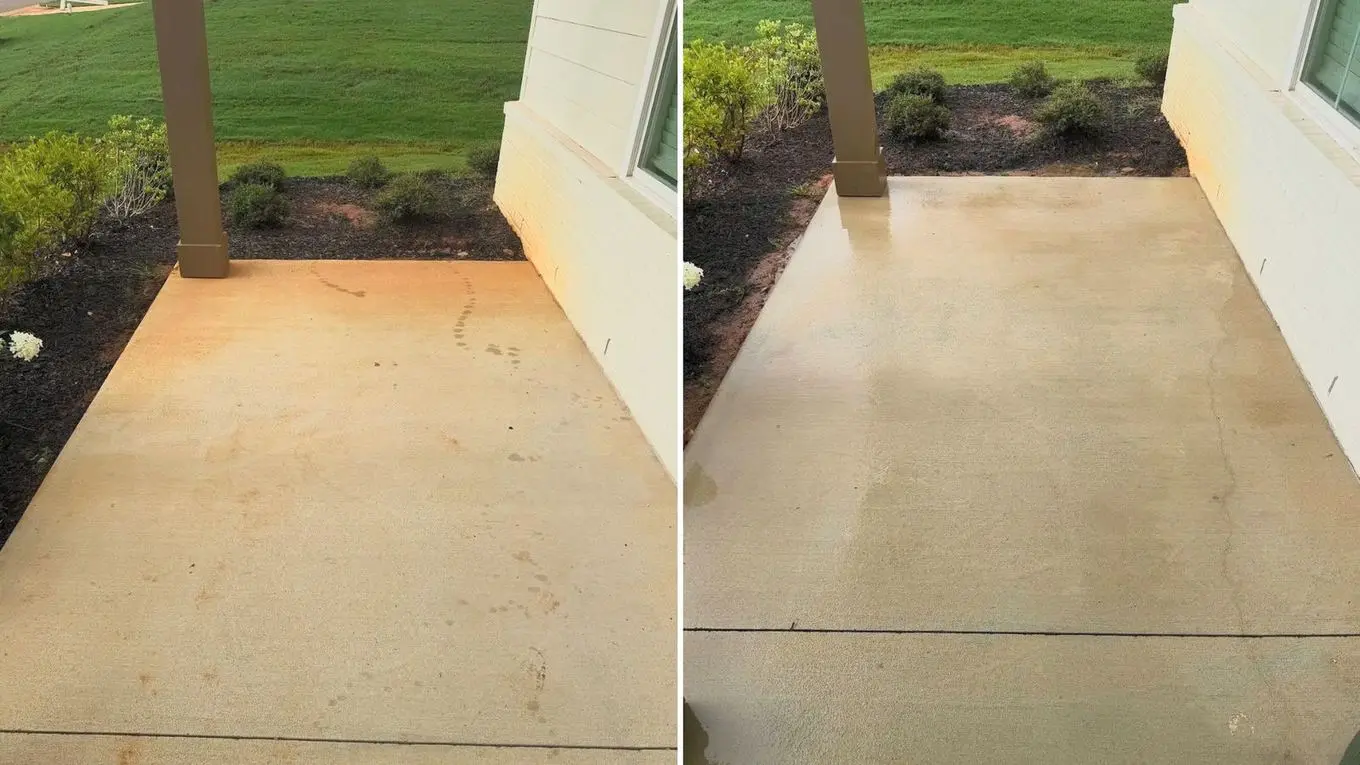
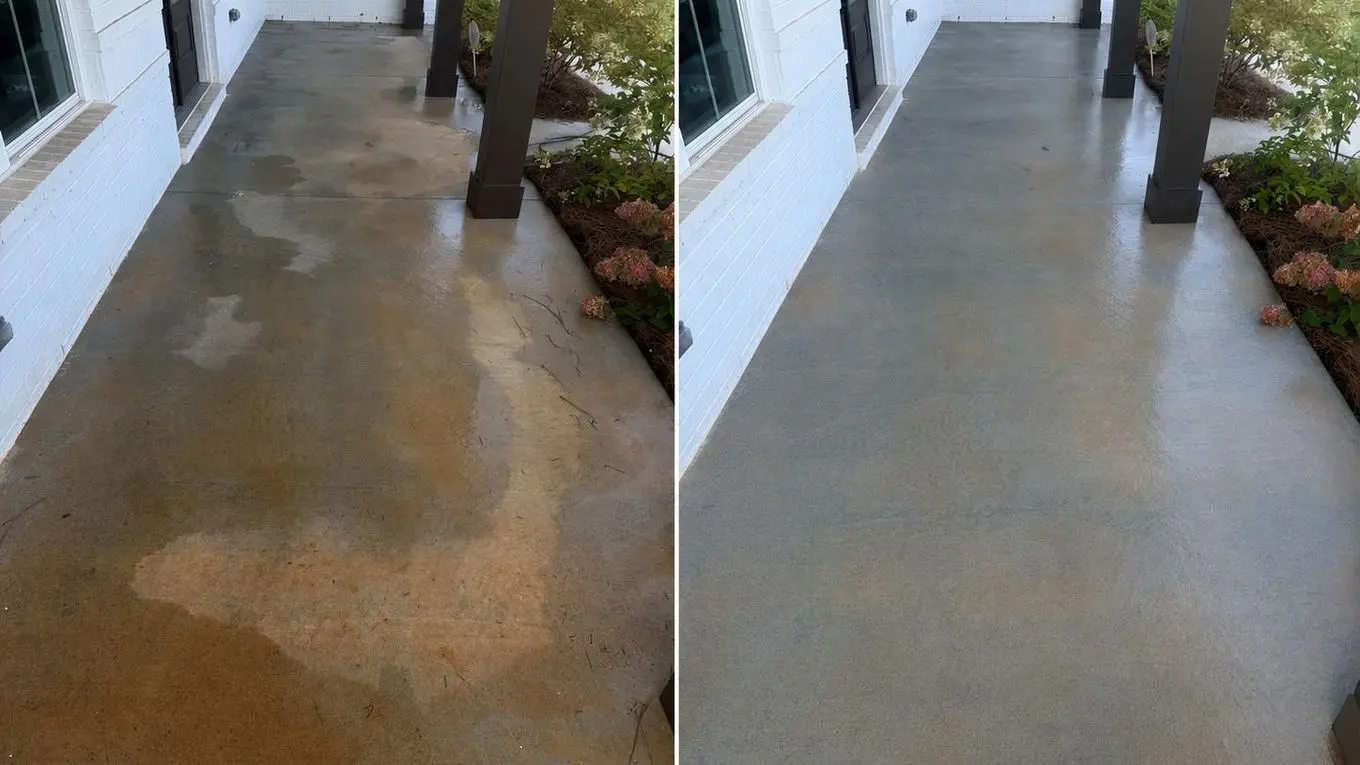
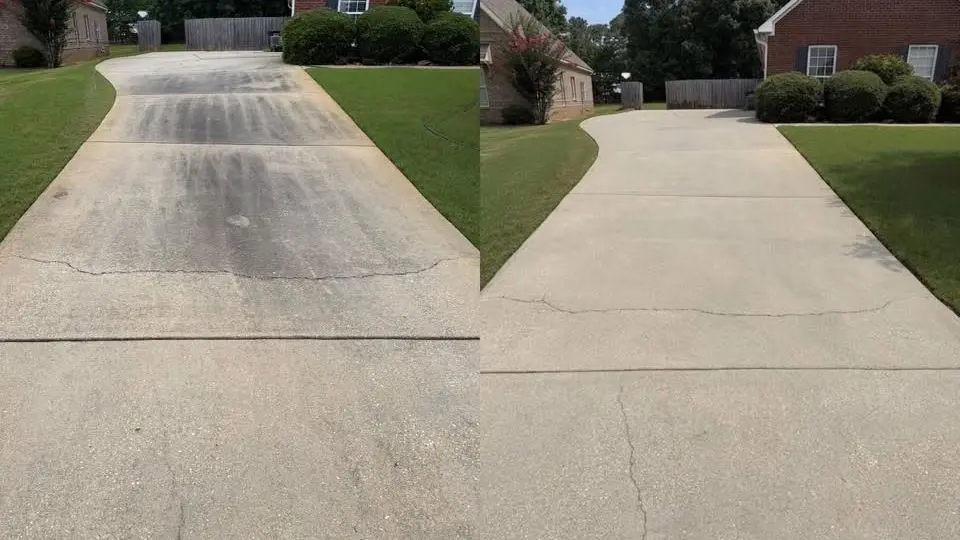
Can Pressure Washing Damage Concrete?
Yes, and the damage is permanent. Here is what causes it, what it looks like afterward, and why more pressure is usually the wrong answer.
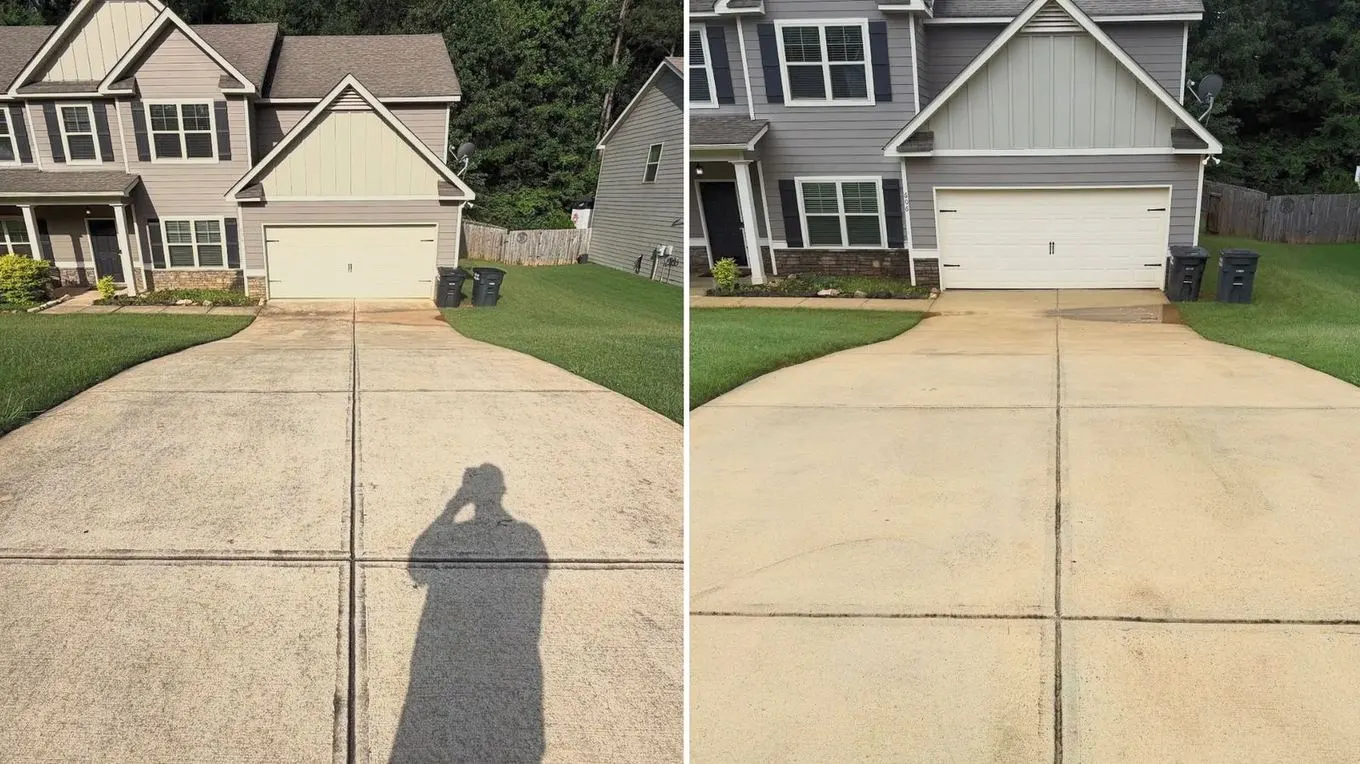
Short answer: yes. Permanent zebra stripes across a driveway, aggregate exposed in a circle where somebody stopped to answer the phone, a stamped entry with the color coat cut off in strips. All of it happens.
None of it gets fixed by cleaning again. It is in the material now.
What actually causes it
Too much pressure held too close. This is almost all of it. A zero degree tip an inch off the slab will cut into concrete. Even a fifteen degree tip held close enough will erode the paste on the surface and expose the sand and stone underneath.
Lingering in one spot. Concrete does not fail instantly. It fails from dwell. Stopping to answer the phone with the trigger down is how a perfect circle ends up etched into a patio.
Cleaning young concrete. Fresh concrete has not reached full strength. Washing a slab that is only a few weeks old, especially with a surface cleaner or a tight tip, will take material off. New pours should generally cure a good while before anyone puts pressure on them.
Weak or poorly finished concrete. Some slabs were troweled badly, poured in bad weather, or mixed wet. That concrete is soft at the surface and will fail at pressures a good slab shrugs off. You often cannot tell until you start, which is why you test an area first.
Older concrete that is already spalling. If the surface is flaking, pressure accelerates it. That slab needs a different conversation, not a stronger machine.
What the damage looks like
Wand stripes. Alternating light and dark bands running the direction the operator swung the wand. What you are seeing is clean concrete next to concrete that got cut a little deeper. Once the whole slab weathers, the pattern is still there.
Exposed aggregate. Patches where the smooth paste is gone and the sand and stone are showing through. Rough to the touch.
Halos and circles. From stopping in one place.
Fuzzy or pitted texture. Widespread surface erosion from working at too high a pressure across the whole slab.
Why a surface cleaner is the right tool
A rotating surface cleaner keeps the tips at a fixed height, spins them so no one point takes sustained hit, and covers a wide path in a single pass. Same pressure at the pump, completely different effect on the concrete, because the energy is spread out and never dwells.
It is also considerably faster, which matters to you because most of what you are paying for on a driveway is time.
The wand still gets used, on edges, joints, corners, and the seam at the garage door, where a surface cleaner physically cannot reach. That work is done at a distance and kept moving.
The part homeowners can act on
If you rent a pressure washer, the two rules that will save your driveway are simple:
Use a wide tip, twenty-five or forty degrees, not the red one. And keep the wand moving, always, at a distance where you can see it working rather than where it feels satisfying.
If the concrete is not coming clean at a safe distance, the answer is a pretreatment, not a tighter tip. That is true for us and it is true for you.
When to just leave it alone
Concrete that is spalling, cracking badly, or already showing exposed aggregate does not need cleaning. It needs a mason to look at it, or it needs to be accepted as is. Cleaning it aggressively is not going to improve it and it can genuinely make it worse.
We would rather tell you that during the estimate than take the job.
Have a surface you are not sure about?
Send a photo and tell us what you are dealing with. You will get a straight answer, including if the answer is that cleaning will not fix it.